Few human behaviours induce more intense feelings of horror, disgust and revulsion - and fascination - than cannibalism(Stoneking 2003, 489)
In the 1960's the discovery of the Wari tribe in the western Brazilian rainforest sent a ripple of excitement through the anthropological community. A tribe that existed deep in the Amazon, untainted by the rigours of westernised society. Yet this excitement was short lived when public fascination transformed into horror and disgust. The reason? The Wari tribe indulged in ritual feasting which involved roasting and eating their dead (Conklin 1995, 75).
The above quotation by Stoneking (2003) succinctly summarises general feelings towards cannibalism both in the public and the academic community. It is a taboo subject that is assigned to the realms of political incorrectness accompanied by its friends 'savage' and 'primitive'. Traditionally, cannibalism was used as a "psychological mechanism of dehumanizing enemies in order to justify actions against them" (Ortiz de Montellano 1978, 616), namely mass genocide and dispossession by colonial powers in the Americas. Yet despite this reluctance among archaeologists to cry 'cannibalism' it never fails to generate a morbid fascination when the evidence suggests that our ancestors were indeed eating each other. The most detailed, documented case of cannibalism comes from South-West Colorado, more precisely the Mesa Verde region.
Approximately 1150AD a violent episode occurred in a small habitation in the Mesa Verde region of South-west Colorado. Seven individuals were systematically dismembered and defleshed and subsequently cooked. The remains were then discarded and abandoned along with tools on the floor of two pithouses (Billman et al 2000: 145). The detailed analysis of the site by Billman et al (2000) came under intense criticism by Dongoske et al (2000) who claimed that the former were selective with their findings in favour of the proposed cannibalism theory and that the Mesa Verde site was not clear evidence of cannibalism. Of course in order to believe this Dongoske et al (2000) had to ignore the sensational evidence uncovered by Marlar et al (2000). This evidence was in fact a preserved coprolite from the site that had been deposited after the proposed butchering and consumption of humans (Marlar et al 2000: 76). Subsequent analysis of this coprolite revealed that traces of human myoglobin were indeed present in the coprolite. The structure of human myoglobin is such that it cannot be found naturally occurring in human stool material (Marlar et al). Therefore the only way it could have been present in the coprolite is if the depositor had in fact consumed human flesh. Marlar et al (2000) have, it appears, presented convincing evidence to suggest that cannibalism was the, or one of the primary motives behind the sudden and deeply violent incident at the Mesa Verde. Of course it has been argued that this coprolite did not belong to a human but rather a carnivore (Dongoske et al 2000) however, the circumstances and the context in which it was deposited suggest quite strongly that it was human.
Yet the question remains; why? If the attack was indeed a result of starvation cannibalism (Fetterman and Honeycutt 1990; Kane 1986; Nickens 1974, Hough 1902 cited in Billman et al 2000, 146) then what was the need for the high levels of violence and the blatant disrespect accorded to the remains? The total lack of ceremony or deference sits uneasily with this writer and it is impossible to ever know what really happened but one thing that can be certain is that cannibalism did happen at this site whether Dongoske et al (2000) choose to believe it or not. Their article appears to be no more than disgruntled first nation campaigners calling for more "rigorous adherence to scientific protocol"(Dongoske et al 2000) when it is already clear that in depth scientific study has taken place. I am by no means suggesting that their motive for writing the article is purely political. Indeed, their emphasis on a more open and reflexive archaeology is entirely relevant. Furthermore I agree that archaeologists should always make 'ethnicity and group identity' an important priority (Dongoske et al 2000, 188) when studying remains and speculating over their fate. However, they must also accept that cannibalistic acts may have been part of this Pueblo culture.
Cannibalism is an extremely contentious issue in archaeology as I have attempted to demonstrate. This of course is indicative of the conditioned westernised response whereby cannibalism is a vile act that should only be carried out as the last desperate resort of a starving man. It is fair to say that little is understood about the ritualistic nature of cannibalism. Referring to the aforementioned Wari tribe, Conklin (1995) writes, "the material motivations associated with endocannibalism were not biological needs...but concerns with structuring cultural meanings in regard to human-animal relations that were essential, not just to subsistence but to the entire social order" (1995, 95). Their intentional acts of cannibalism are linked to their belief in recycling energies and reaffirming socio-ecological security (Conklin 1995, 94). This act transcends the nature-culture barrier erected by Levi-Strauss (Conklin 1995). Cannibalism is symbolic of life's continuity after death as those that have passed on are joined once again with nature. There does not appear to be anything inherently barbaric about this deeply spiritual tribe's treatment of their dead. Indeed it is extremely emotive and displays a deep understanding of humanity's relationship with the earth.
In summary, I would like to refer to Marlar et al (2000, 77), "cannibalism has occurred in a wide range of societies for a wide variety of reasons...we hope that the debate will shift from whether or not cannibalism occurred to questions concerning the social context, causes and consequences of these events". Wiser words were never spoken - cannibalism did and still continues to happen for whatever reason and by refusing to approach it with an objective frame of mind we can never fully appreciate or begin to understand the function it played in past society. Cannibalism must now part with its friends 'savage' and 'primitive' and be elevated to join the ranks of the 'symbolic' family whether it be cultural, biological, economical, political or simply 'spiritual'.
Bibliography
- Billman, B. R., Lambert, P. M., and Leonard, B. L. (2000) 'Cannibalism, Warfare and Drought in the Mesa Verde Region during the Twelfth Century A.D.' American Antiquity 65 (1): 145-178
- Conklin, B. A. (1995) '"Thus are our bodies, thus was our custom" mortuary cannibalism in an Amazonian society.' American Ethnologist 22 (1): 75-101
- Dongoske, K. E., Martin, D. L. and Ferguson, T. J. (2000) 'Critique of the claim of cannibalism at Cowboy Wash.' American Antiquity 65 (1): 179-190
- Marlar, R., Leonard, B., Billman, B., Lambert, P. and Marlar, J. (2000) 'Biochemical Evidence of Cannibalism at a Prehistoric Puebloan Site in Southwestern Colorado.' Nature 407: 74-78
- Ortiz de Montallano, B. (1978) 'Aztec Cannibalism: An Ecological Necessity?' Science 200 (4342): 611-617
- Stoneking, M. (2003) 'Widespread Prehistoric Cannibalism: easier to swallow?' Trends in Ecology and Evolution 18 (10): 489-490
The use of an artist's interpretations in archaeological books and articles, as well as those on television, such as the work of Victor Ambrus, Time Team's Illustrator, are quite often deceptive. The images shown are often composite, showing everything the site has to offer on a small scale, rather than its true nature, where it is spread out over a vast distance. In books, such as Recreating the Past (Ambrus and Aston 2001); liberties are taken and the past reinterpreted to show an idealistic representation of a site or period. The facts which are unknown are often covered; for example by the clever use of weather, such as snow which can be used to obscure site features and hide the detail; and facts known are often exaggerated or misrepresented.
The way interpretative images in archaeology are displayed often appears to be fact rather than interpretation, although the images often say reconstruction underneath this is usually ignored by the reader and taken as reality. Examples of this include the interpretations of Stonehenge, Grime Grave and Star Carr, and these are to name but a few. One of the problems with these images is that they show things for which there is no evidence; such as the Star Carr image which shows a boat and the image of the timber phase of Stonehenge displaying a small village which has yet to be found next to the outer ditch. The idea of showing these features is sometimes a good idea to suggest to the public what could have happened; however, due to the lack of supporting evidence for these ideas, they should not be used. These images are often not selected for their archaeological accuracy but for their romanticism. The main problem with these images is that the artist only demonstrates one reconstruction of an infinite amount of possibilities and the images are portrayed as if they are reality. This is where Verfremdungseffekt comes in.
Verfremdungseffekt is the German word for the distancing effect; sometimes used as a theatrical or cinematic device to make the audience realise that the performance is artificial and that they are viewing a portrayal of the subject that has been created by the artist or director . This means that the audience does not get drawn into a falsified world. Although quite often the aim with a cinematic or theatrical performance is to draw the audience in and captivate them, some directors prefer not to do this and use a far more abstract approach, like Verfremdungseffekt.
The use of Verfremdungseffekt in archaeology is rare. Usually the artist wants to make the image seem more realistic to the public; even if this is not a true representation. There has however recently been a project based around the Mesolithic site of Star Carr, in Yorkshire, specifically the antler frontlets discovered there and their alleged shamanistic origins . The Enkyad Animation project is the work of two University of Bradford Students Alex Higgs and Patrick Hadley who have employed the idea of Verfremdungseffekt in their visual interpretations of the Star Carr antler frontlets. Phase one of their project can be seen on their website here . The animation is a very clever way of showing the well known theory of the shamanistic roots of the antler frontlets and challenges the audience to think more about the interpretation rather than to just accept it as fact. The use of colour and design make sure that it cannot be mistaken as reality and comes across as an idea. The use of music and speech as well as image appeals to a broad range of senses and make it more accessible to a wider audience. If this were applied to more sites then I believe that Verfremdungseffekt would be a worthwhile addition to the representation of the archaeological record.
The use of other senses such as sound; does not work as effectively in other circumstances and is open to misuse as well. Live action displays like the Jorvik Viking Centre, York, mislead the public by only showing one possible interpretation of the noises and surroundings of Viking York. Although Jorvik is based on archaeological evidence, there is no way to really know what York would have been like during this period. As all interpretation of data is subjective, the incorporation of the Verfremdungseffekt approach is needed to show that what is presented is not necessarily what happened.
For museums and live action displays such as the Jorvik Viking Centre the use of Verfremdungseffekt is the way forward and the innovative nature of the Enkyad Project is ideal for this type of display. The Enkyad Project recently won the runner up prize at the University of Bradford's Think Business contest. I look forward to seeing the second phase of the Enkyad Project and hope it is the forerunner to many such projects.
You can keep up to date with the Enkyad Projects on their website Enkyad Projects on their website and the Facebook Group,
Bibliography
- Ambrus,V. and Aston, M. (2001) Recreating the Past, Tempus, London.
- Anon.(2010)'Alienation effect' In Encyclopaedia Britannica ; Encyclopaedia Britannica Online: http://www.britannica.com/ Accessed January 24, 2010.
This article is the first of a pair (the second to be in Issue 10) considering 2 examples of how the people of York interact with their heritage. Raindale Mill is 'on our doorstep' and The Posthole wishes to draw attention to it and celebrate the successful preservation of this building as well as support its continued preservation and display at the York Castle Museum.
The Phoenix by the River Foss - Raindale Mill
Rise
Nestled in a secluded cleft at the foot of Raindale Valley, North York Moors, Raindale Mill once sat. In its current location, on the bank of the Foss, the mill is passed by hundreds every day who are unaware of the journey it has taken to get there. Two hundred years ago, William Sawdon and his family, who lived in the cottage, installed a waterwheel and milling machinery.

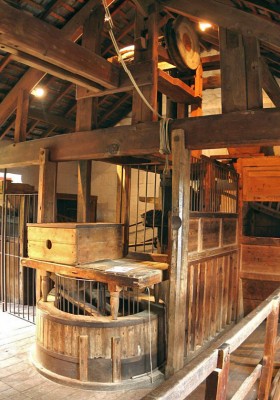
Figure 1 - The waterwheel (Credit:David Harker).
Like many North Yorkshire mills, it was small. One pair of stones ground the locally grown wheat, barley and oats. It served the local area with flour and meal, some of which was used to feed livestock.
Decline
Life at the mill carried on as usual for a number of generations. William Sawdon was succeeded by Henry Boulton and he was succeeded by his son, Henry Boulton Jnr.
In 1915, the stream that fed the waterwheel changed course. The mill could no longer generate power to grind the wheat, and it fell into disrepair. It is here, at the death of the mill, that its journey really begins.
Rebirth
Dr. John L Kirk had a passion. He collected ordinary everyday objects, and in 1938, opened the doors of the York Castle Museum in order to preserve and display these objects for future generations. Mr. Boulton was a patient of the doctor and offered him the mill for the grounds of his newly opened museum. Dr. Kirk accepted his offer, and a new chapter in the mill's life sat poised, ready to be written.
But like so many other projects begun at the start of the 20th Century, the Great War intervened. Other economic factors and a second World War meant that work did not begin on the relocation of the mill until 1953. By this time, the mill had been sat idle for nearly forty years and many of the mechanisms within the mill had degraded beyond repair. Determination won through. The mill we see today is actually an amalgamation of parts from mills across Yorkshire, a sort of 'Frankenstein's Mill'.

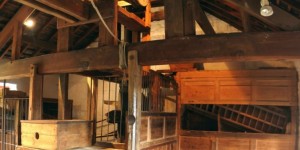
Figure 2- The reconstructed interior of the mill. (Credit:David Harker).
On the 23rd March 1966, the process was finally completed. The mill had risen from the ashes and now sits on the banks of the River Foss. The machinery inside still works and is today worked by volunteers who demonstrate what life would have been like at the mill for the likes of William Sawdon and Henry Boulton and their families.
The museum currently has the support of around 150 volunteers. Many help out with behind-the-scenes curatorial tasks, handling the collections and preserving them for the future in addition to making them ready for display. Others deal with the visitors, going into displays and interacting with the audience, ensuring they handle objects safely, while also giving them added information and answering questions. They bring the past to reality. Without volunteers, the Museum would be unable to run and with this in mind The Posthole urges its local readers to spare an hour or two a week to help keep this fascinating exhibit running.
Fiona Burton, Volunteers Manager at the museum, is looking to expand the project, with the aim of opening the Mill more days a week. It is an interesting exhibit, complete with hands-on displays.
I would like express my thanks to Fiona Burton, Sherri Steel and Martin Watts for their help in producing this article, as well as to Dave Harker for providing the photographs.
If you are interested in offering your time or expertise towards this, or any other York castle Museum project, you can contact Fiona Burton, Volunteers Manager at fiona.burton@ymt.org.uk.
The Teffont Archaeological Project has been running since 2008 and aims to further understanding of the archaeology of the village of Teffont Evias in south Wiltshire (see Figure 1), in particular the late Iron Age, Roman and Early post-Roman periods. The previous season's work had identified several areas of Iron Age and Roman occupation through desktop research, geophysics and fieldwalking, and produced a report summarising the current evidence for how the inhabitants of Teffont acted within the landscape during the Roman period, and the changes between the Iron Age and Roman period (Roberts, unpub. 2009). The research team from York and the local community felt that the project should be taken further due to the significant research potential of the area (Draper 2006, 7-8). To this end another season of fieldwork was undertaken in 2009.
The 2009 fieldwork season of the Teffont Archaeological Project had two main research objectives. First, to provide definite locational evidence for Roman domestic settlement in Teffont Evias, and secondly, to begin to place such settlement in its wider landscape context. The fieldwork undertaken consisted of field-walking, geophysics, topographic survey and test excavations. Fieldwork was focused on the 'Glebe' field, which had produced large quantities of Roman pottery, including much samian ware, when field-walked in the previous year (see Figure 2). Geophysical and topographic survey and field-walking were also undertaken elsewhere in the village, and produced evidence for another probable Roman occupation site. An 80x80m area of the Glebe, covering the central area of the field, was surveyed with both magnetometry and resistivity, taking some 25600 readings. Both sets of results showed an area of intense activity corresponding with the concentrations of pottery discovered the previous year, as well as other areas of archaeological remains. Two test trenches were cut across the edges of this activity area, and three test pits cut elsewhere in the grid to ground-truth the geophysics results. One test pit placed deliberately in a blank area of results found no disturbance, as expected. Another placed in a blank area closer to the activity area found no archaeological features, but a number of pot sherds, predominantly Dorset black burnished ware, a local high status ware dating from the mid-Roman period. The third test pit, placed across an area of confused results, produced an arc of stone that may be the top of a boundary feature, together with large body sherds of black burnished ware, nails and animal bone. Deposits indicated multiple layers of use, although time constraints did not allow excavation to natural.

Figure 1 – The location of Teffont within south-west England, shown by a red dot. Reproduced from Ordnance Survey map data by permission of Ordnance Survey, Crown copyright.
Test trench A produced two main activity zones, separated by a limestone rubble boundary. The first, a large pit, contained an articulated cow skeleton, associated with the closure of the deposit (see Figure 3). The second, in the opposite corner of the trench, contained nails and other metal artefacts. These areas are likely to be areas of domestic activity peripheral to the main occupation, the edge of which was discovered in test trench B.

Figure 2 - Distribution of Roman pottery in the Glebe field, illustrating the area field-walked in the context of the research area. (Credit: author).
Due to the intensity of archaeological activity in trench B it was not excavated beyond the first several layers. The upper layers present were very likely the collapse of a substantial wall, which seems to have included opus signinum, and been founded on substantial masonry blocks. A door lintel is clearly visible (see Fig.4), and many finds were excavated, including substantial quantities of pottery (including Samian ware), metal and a possible tesserae tile. That this building was a high status domestic occupation site seems very likely due to quality of finds derived from it, and the quality of construction and materials.

Figure 3 – Articulated cow skeleton in NW corner of Test Trench A. (Credit: author).
An aim for the following season will be to fully excavate this trench, and attempt to establish the relationships between the exterior activity areas and the occupation site. The proximity of the site to a probable Romano-British shrine in Upper Holt Wood (Grinsell 1957), on the ridge above the field may indicate a religious aspect to the site. These aspects will be fully elucidate, and the context of the site discussed in the full site report for 2009, currently being completed.

Figure 4 – Door lintel stone in test trench B. (Credit: author).
Following the 2009 season's discoveries, the team plan to continue working with the local volunteers and community to research Teffont's heritage. One of the most important aspects of the project is its use of multiple methods, and fresh approach to open discussion from all participants regarding methods and interpretation. This allows a training process to take place which has proved immensely rewarding for both project management, students and volunteers. In 2010 fieldwork opportunities are available for 20 University of York students, whether under-graduate or post-graduate, and these will be subsidised substantially by ArcSoc for paid members. To give some idea of the experience available, one of our team members last year, a third year at the time, has provided excerpts from her dig diary.
Teffont Dig Diary, August 2009. Samantha Rowe
Last summer a few of us dedicated York archaeology students spent 3-4 weeks in a big field in the Wiltshire countryside trying to uncover the mysteries of the surrounding Roman landscape. We were based in a quaint little village called Teffont Evias; a place with a long and varied history. Our task was to uncover information about the Roman occupation of the area with very little time and a very small workforce!
Here are a few selected extracts from our Dig Diary 2009, courtesy of me, Sam Rowe; a graduate of York and future excavation supervisor for the 2010 dig.
The first two weeks on-site were spent carrying out geophysical surveys (weather permitting) in a huge field known as 'The Glebe'. A lot of hard work and plenty of hay splinters later and we were able to identify interesting areas to put in some test pits. Sometimes on 'bad weather' days, the team would get the afternoon off (yay!). Other times you ended up being allocated to 'augering', which is a very difficult and tedious way of taking soil samples. Some of us enjoyed augering, but others never did quite get the hang of it, especially when it came to deciding what colour the soil was!
Thursday 27th We finished the resistivity work! A great sigh of relief from many!
Friday 28th EXCAVATION BEGAN! We managed to 'hire' a JCB and dug out 5 test trenches. Within 2 hours we had uncovered the remains of stone walling, a batch of pottery, and an articulated cow skeleton! The 3 trenches appropriately became known as 'stone trench', 'bone trench', and 'pot trench'. The next few days were very exciting with more bone and pottery discoveries, with trenches being extended all the time. We were occasionally interrupted by passers-by walking their dogs, asking us what on earth we were doing!
Thursday 3rd Sept After being delayed by rain, our last day was epic: one day to record as much as we possibly could before the rain washed it away! We must have taken over 400 TST points! We all got a little muddy and hysterical, but our hard work paid off.
People's thoughts on their experience at Teffont:
- Faith (now a 3rd year): "Made archaeology enjoyable…made some really good friends through all the hard work! Learnt more than I ever thought I would."
- Richard (local volunteer): "Sore knees…field turns out to be full of interesting stuff…a new chunk of the big story."
Personally I had a great time. It was very hard work, and by the end of the dig my pathetic tent was about to collapse, but I met some great people and brushed up on my archaeology skills. We all came back to York with a little bit of Teffont in us (mainly in the form of straw splinters!), but were glad we went and can't wait to go back! Like at the end of any dig, this one ended in us thinking, 'if only we had more time!' But there's always the 2010 dig season to look forward to!
Bibliography
- Draper, S (2006) Landscape, Settlement and Society in Roman and Early Medieval Wiltshire. Oxford, BAR British Series 419.
- Grinsell, R V (1957) 'Roman Archaeology' in E Crittal (ed) (1957) Victoria County History of Wiltshire. Volume 1, part 2 - Archaeology , 53-274. Oxford, Oxford University Press for Institute of Historical Research.
- Roberts, D (2009) 'A study of the Roman archaeology of the parish of Teffont, Wiltshire, and its wider context in terms of regional settlement patterns.' Unpublished BA dissertation, York.
Gertrude Bell was an extraordinary woman. Although she died at only 58 her life was one of achievement and adventure, and she was, "...in her time, the most influential figure in the Middle East" (Howell 2006, 3). Despite the fact that she became a household name during and after WW1, Bell has been largely forgotten, and sadly eclipsed, by the fame of her friend and colleague, T.E. Lawrence. This article will explore Bell's work in Iraq during and after WWI and discuss her legacy for archaeology in the country and what has happened there since her death.
Bell, a traveller from a young age, made at the turn of the 20th century the first of several expeditions into the Arabian Desert (Winstone 1978, 58; Howell 2006, 99), beginning a love affair with the Middle East which was to last a lifetime. Between 1900 and 1914 Bell made 6 journeys into the desert during which time she studied and recorded ruined Abbasid and Byzantine architecture and learned the ways of the desert (Winstone 1978, 58-108, Burgoyne 1958, 212-48 & Howell 2006, 99-124). Bell's final, and perhaps most famous, expedition before WWI broke out was her 1913-4 journey from Damascas to Hayyil (Winstone 1978, 127; Lukitz 2004). It was her most dangerous journey to date because of the volatile nature of her destination (Lukitz 2004; Howell 2006, 166). Its purpose was to gather information for the British Government about the rival tribes of Wahabi and Shammar (Lukitz 2004; Howell 2006, 166). In terms of exploration her journey was not particularly notable but for the information Bell gathered, about the Rashids and the Ottoman regime, it was of immense diplomatic importance (Lukitz 2004). This contributed to the decision made at the beginning of WWI which took Bell back to the Middle East.
Between her intrepid journeys Bell also made quite a contribution to archaeology. At 33 years old Bell, unsatisfied with her achievements to date, had decided that archaeological work would meet with her own exacting standards for accomplishment (Winstone 1978, 90). During her 1905 trip to western Syria and Anatolia, Bell conducted her customary surveys of the ruins she encountered but it was for Binbirkilisse, the Thousand and One Churches, which she made her journey (Burgoyne 1958, 221; Winstone 1978, 98; Lukitz 2004 & Howell 2006, 113-5, 119). The book resulting from Bell's work at Binbirkilisse, completed with Sit William Ramsay (ecclesiastical archaeologist and epigraphist), is described by Ousterhout and Jackson in the 2008 edition as "one of the most enduring works of scholarship on the Byzantine monuments of Asia Minor" (2008, ix) and it is still, 100 years after its first publication, considered the standard work on this subject (Howell 2006, 127). Bell's other important contribution to archaeology is her book The Palace and Mosque at Ukhaidir (1914), considered by some to be "her most important contribution to archaeology" (Lukitz 2004).
Bell found Mesopotamia in a state of dissent when she arrived in April 1917 (Burgoyne 1961, 57). She was there as part of the War Office and based in Baghdad (Burgoyne 1958, 15-55; Howell 2006, 220-273). As one of the only Westerners to have travelled extensively through Palestine and the Levant Bell's knowledge was unique, making the documents she compiled invaluable to the administration of Mesopotamia during the 1920s (Burgoyne 1961, 30-1, 58; Winston 1978, 96-8, 161). Bell's political role, at which she work tirelessly, helped to bring Prince Feisal, son of the Sharif of Mecca, to the throne (Howell 2006, 352), but it is her archaeological work that she took up after the war which is the focal point of this article.
Once an Iraqi government was in place Bell began, gradually, to focus on archaeology again. In October 1922 the Cabinet appointed Bell honorary Director of the new Department of Antiquities which was placed under the jurisdiction of the Ministry of Public Works (Bell 1930, 527; Winstone 1978, 243; Howell 2006, 410). This change in her focus was prompted by the attempt made by Sir Percy Cox and T.E. Lawrence to move artefacts found before the war by a German team under Dr Herzfeld, from Samarra to the British Museum (Winstone 1978, 242-3). Bell began by writing a Law of Excavations which was passed at the end of 1922 (Bell 1930, 528). The more stable political climate had brought requests to conduct excavations at Iraq's many archaeological sites flooding in from all corners of the world and so the need for updated antiquities legislation was desperate (Howell 2006, 410; Fagan 2007, 284).
By October 1923 Bell was working with the Ministry of Works on a proposal for a museum to display the antiquities she claimed for Iraq (Bell 1930, 543). According to Howell (2006, 410) Bell soon had "the richest collection in the world of objects representing Iraq's early history" displayed in a few rooms near the palace in Baghdad (Fagan 2007, 287). By March 1926 Bell had acquired a more suitable building for her museum (Bell 1930, 601-2, 607; Fagan 2007, 287). The first room of the museum, the Babylonian Stone Room, was officially opened by King Feisal in June 1926 (Bell 1930, 615-8; Fagan 2007, 288).
It was during this time that Bell wrote "I always feel, when I'm back to archaeology, that I'm nothing better than an antiquarian at heart" (Bell 1930, 603). This may refer to her lack of formal training, for despite her obvious talent for archaeology she had had little instruction apart from a few weeks spent with Dr David Hogarth in Greece while on holiday in 1898 (Burgoyne 1958, 59; Winstone 1978, 66-7). I would suggest, however, that Bell was too modest and self-critical. The very fact that she was a Western archaeologist fighting the corner of the origin country for so many priceless objects makes her much more than an antiquarian. As Bell's political role diminished the sense of Iraqi nationalism that had guided her politics transferred into her archaeological work during the last years of her life. Although she was not the instigator of nationalist ideas in the country, for they were already emerging before WWI (Fagan 2007, 276), she gave the people of Iraq control over their antiquities and therefore control over their past. This gave the Iraqis a sense of national identity, embodied in the museum she set up (Fagan 2007, 341), an essential component for a new country to be successful.
The large-scale excavations run by a single archaeologist of Woolley and Bell's era were being replaced by teams of specialists working at a slower pace on a smaller scale (Fagan 2007, 310). Likewise, Bell's work was instrumental in bringing an end to the activities of "self-taught amateurs and treasure hunters" who dominated research in the Middle East before WWI (Fagan 2007, 155). Iraq's relatively settled political atmosphere during the 1920s-early 1930s was an important factor in the success of Bell's work and the new methods of excavation being developed (Fagan 2007, 311). This time "marked the end of a heroic era in archaeology that saw unlicensed treasure hunting replaced by scientific digging focused on solving specific historical problems" (Fagan 2007, 307, 309). Although Bell had no role in the development of such new techniques she set up the infrastructure which created favourable conditions for these excavations while putting control of them in the hands of the Iraqi people.
The approach of antiquarians of earlier centuries, such as Austen Henry Layard, had resulted in Arabian artefacts languishing in foreign collections (Fagan 2007, 284). Bell's love for the country and its people allowed her, as a Westerner, to understand the importance of these objects to the nation's hitherto non-existent national identity. If Iraq was going to be a nation it needed a national identity which it could only get from its past. Bell dedicated the last years of her life to this cause. Bell's law encompassed the rights of both the country and the excavator (Bell 1930, 521; Howell 2006, 410). Armed with her new law and accompanied by Major J.M. Wilson (Ministry of Public Works) Bell began the important task of travelling to archaeological sites at the end of each season in order to divide the finds between Iraq and the archaeologist (Winstone 1978, 243; Howell 2006, 410-11). It was a difficult task for although, by rights, the most precious pieces should remain in Iraq often they required special preservation for which Bell's facilities could not yet cater; for example at Kish, where she allowed the archaeologist to keep an early Babylonian copper stag (Bell 1930, 557). Bell also visited sites that were not under excavation and if she discovered locals digging them, as at the southern Babylonian city of Erech, she often purchased objects they found (Bell 1930, 549). Bell was changing the way archaeology was managed in order to protect Iraq's heritage.
Bell died in July 1926 at the age of fifty-eight from an overdose of sleeping pills (Fagan 2007, 288). A plaque dedicated to her and a bust of her were erected in her museum after her death (Howell 2006, 415; Fagan 2007, 288). Bell's legacy in Iraq is ongoing although it has been severely affected firstly by the extreme nationalism of successive Iraqi governments and secondly by the two gulf wars. King Feisal died in 1933 and was succeeded by his son Prince Ghazi (Fagan 2007, 319). But Ghazi was young and inexperienced and the government was soon under the control of Iha al'-Watana or the National Brotherhood Party (Fagan 2007, 319). Their hard-line nationalism was carried through into the Department of Antiquities by the new director, Sati al-Husri, who disliked the presence of foreign excavators (Fagan 2007, 319). He condemned Bell's Law of Excavations, claiming it allowed the theft of Iraq's antiquities and set about re-writing the law so that it became increasingly difficult for foreign excavators to export finds (Fagan 2007, 319). This had the desired effect; most foreign archaeologists left the country or did not return for new seasons of work (Fagan 2007, 319). The only one to fight these restrictions was Woolley who demanded to be able to export several important finds from Ur on the grounds that Iraq did not, at the time, have the appropriate resources for restoration (Fagan 2007, 319-20). Sati also built a new museum, with a grand Assyrian-style entrance, to replace Bell's simple government buildings (Fagan 2007, 320). By the end of the 1930s the Iraqis were taking on ever greater responsibility for research in their country and had even built facilities for conservation (Fagan 2007, 320).
These improvements were facilitating new and exciting research. In 1936 Fuad Safar, one of two Iraqi archaeologists trained in America, returned to Iraq, giving the Department of Antiquities its first chance to sponsor Iraqi-led excavations (Fagan 2007, 320). The department's first large-scale excavation took place at Tell 'Uqair in 1940 and "gave the Iraqis the confidence and training to conduct excavations without foreign support" (Fagan 2007, 320-1). These excavations continued allowing the Iraqi's to make their own discoveries whilst training their own archaeologists, and later conservators and curators (Fagan 2007, 321-3, 2329). Their work helped to extend the knowledge of Iraqi society further and further into the past (Fagan 2007, 323) "By the 1970s Iraq...had one of the best cultural heritage organisations in the world" but it was virtually impossible for foreign archaeologists to gain excavation permits (Fagan 2007, 327, 329). The Department of Antiquities, now the Antiquities Authority, had a new museum, now the Iraq National Museum, boasting twenty galleries with more than 10,000 objects portraying 10,000 years of Iraq's history (Fagan 2007, 333, 329). Iraq also boasted thirteen regional museums and exhibits at many archaeological sites (Fagan 2007, 329). The placement of 1,600 guards at sites across the country had halted looting by local people and archaeologists alike (Fagan 2007, 329-30). In 1974 the antiquities law was tightened yet again, restricting export to scientific samples and study materials only (Fagan 2007, 330). Exciting finds continued but all excavation was halted with the invasion of Kuwait and the First Gulf War (Fagan 2007, 330, 333).
The First Gulf War, through the United Nations sanctions imposed after it, condemned Iraq's heritage metaphorically and the Second Gulf War, through an unsuccessful attempt to secure the Iraq National Museum early in the conflict (Fagan 2007, 335-6), allowed its physical decimation. In 1991 the Antiquities Authority was dismantled causing a loss of personnel resulting in looting at nine of the country's thirteen regional museums (Fagan 2007, 334). The Iraq National Museum itself was damaged by bombing and flooding (Fagan 2007, 334). When Operation Iraqi Freedom broke out in 2003 the Iraq National Museum was at the top of a list of buildings to be secured as soon as Baghdad was taken, but the Iraqi Republican Guards occupied it as a stronghold and during the battle that followed more damage was caused and up to 400 looters gained entrance (Fagan 2007, 335-6). In the months that followed it was discovered that about 14,000 objects had been stolen, of which 5,500 have since been returned (Fagan 2007, 337-8). Since then there has been little excavation conducted in Iraq, the museum remains closed and there is heated debate over how Iraq's heritage should be managed (Lawler 2009, 570). But there are those who are working tirelessly to return the looted items to their proper place and slowly but surely some of the many missing artefacts are being returned (Lawler 2008, 30). It is a dangerous task however; in November 2004 a truck carrying confiscated items on its way to Baghdad was hijacked, its driver and guards killed and the artefacts stolen (Lawler 2008, 30).
This loss of their past is to the Iraqis devastating (Fagan 2007, 341). The Iraq National Museum "...has been a symbol of [their] emerging identity for all Iraqis, regardless of religious or tribal affiliation" and the looting of it and its continued closure damages their national identity (Fagan 2007, 341) and therefore the national unity that, as a nation of tribes and factions, Bell helped them to establish in the 1920s. Bell's legacy, which began as an interest in archaeology while on holiday, became the achievement of unity for a people who live in separate factions but has been halted by war. Bell's nationalist position combined with her knowledge and understanding of both the Iraqi people and their ancient history allowed her to revolutionise the way archaeology was managed in Iraq and begin to return control of it to the people. She wrote the legislation which kept the antiquities in the country and controlled how excavations were conducted from 1922 onwards and although it became more extreme to the point of excluding foreign archaeologists (something I believe Bell would have condemned), Bell nonetheless set in motion the chain of events which gave control of their past to the Iraqi people. Her museum, which although on a different site and on a much grander scale, was tangible proof of this control and gave the Iraqi people, as nothing else could, a sense of national identity and national unity. But now the museum is closed, the bust of its extraordinary founder put into storage (Fagan 2007, 288) and there is little consensus of how or when Bell's legacy may continue. Let us hope that the museum is restored to its former glory as "one of the great cultural repositories of the world" (Fagan 2007, 334) and that research and discovery recommence soon.
Bibliography
- Bell, G L (1930) The letters of Gertrude Bell, selected and edited by Lady Florence Bell. London, Ernest Benn.
- Burgoyne, E (1958) Gertrude Bell from her Personal Papers: 1889-1914. London: Ernest Benn Limited.
- Burgoyne, E (1961) Gertrude Bell from her Personal Papers: 1914-1926. London: Ernest Benn Limited.
- Fagan, B M (2007) Return To Babylon: travelers, archaeologists, and monuments in Mesopotamia. Colorado: University Press of Colorado.
- Howell, G (2006) Gertrude Bell: Queen of the Desert, Shaper of Nations. New York: Farrer, Straus and Giroux.
- Lawler, A (2008) "Preserving Iraq's Battered Heritage" in Science, 321, 28-30.
- Lawler, A (2009) "Iraq Museum May Reopen Amid Controversy" in Science, 323, 570-1.
- Lukitz, L (2004) "Bell, Gertrude Margaret Lowthian (1868-1926)". Oxford Dictionary of National Biography available at www.oxforddnb.com/view/article/30686 accessed 29th June 2009.
- Ousterhout, R G & Jackson, M P C (2008) foreword to The Thousand and One Churches by Sir W M Ramsay and Gertrude L Bell. United States of America: University of Pennsylvania Museum of Archaeology and Anthropology.
- Winstone, H V F (1978) Gertrude Bell. London: Jonathan Cape Ltd.