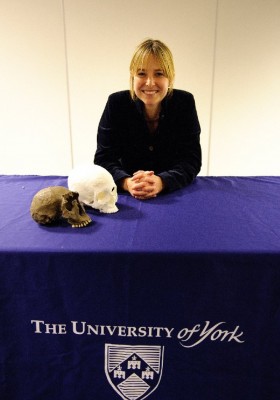
Hello everyone and welcome to a brand new year of study at King's Manor. An especially big welcome is extended to all the exciting new faces that autumn term has brought us, including our new first year undergraduates and the new arrival of post-graduate students.
Mark and I are now entering our third year of study, with me aiming for a BSc and Mark studying for a BA (both in Archaeology). Our third year is going to be taken up with writing our dissertations and we recommend this year's second years start thinking about their possible research topics now. That can be quite a fun process and a good opportunity to let yourself shine.
The Post Hole has an exciting year planned! We are really looking forward to being inundated with lots and lots of articles from everyone! Please do not be shy, and please do not lack the confidence, you might have something really interesting to share. We would like to publish two issues a term for you, with about six articles in each. There are going to be interviews with some well-known faces in archaeology, which we are really excited about.
Do not forget to check us out online. You can read, and rate, our articles on our website http://www.theposthole.org/ and join our Facebook page for some chatter. If you want to submit something, details for potential authors can be found at the Post Hole website.
I hope everyone has an absolutely fantastic year, but do not forget to buy extra thick jumpers and woolly gloves. King's Manor will soon be freezing! Seeing lots of students in heavy coats, mittens, bobble hats and scarves, working at the computers in K120, is a sight to be seen! But it is a happy price to pay for being in such an old and beautiful stone building. Do check out the history of King's Manor, because it is an incredible place. And feel free to say hello to us if you see us around the building.
Jenny Borrett (co-editor)
A few short introductions to the new team running The Post Hole over the coming three terms.
Jenny Borrett (co-editor)
Jenny is a mature student and a lone parent, working on the Human Evolution module during autumn term. She is now in Year 3 of her BSc course.
Mark Simpson (co-editor)
Mark is also a mature student (there are only two on the team) studying Battlefield Archaeology this term. He is in Year 3 of a BA in Historical Archaeology and is the only non-prehistorian on the staff.
Jacqui Mellows (Submissions Editor)
Jacqui, like Jenny and most of the other staff, is on the Human Evolution module this term. She is also on the BSc course and is the first 'port of call' for authors sending their work to The Post Hole.
Philip Morris (Press & Publicity)
Philip is also taking Human Evolution in the autumn term. He will be distributing the print copies of The Post Hole around the Manor and taking in competition entries.
Khadija McBain (Secretary)
Khadija is taking the BA in Archaeology and she is studying the Archaeology of Colonialism. She will keep the team on track with minutes from meetings and will answer general e-mail inquiries.
David Altoft (Assistant Editor)
David is our sole non-Year 3 student, but also a pre-historian. He is currently in Year 2, studying Themes in Prehistory, Emergence of Mediterranean Civilisations and Research Skills. He will be deputising for each post on the team in the coming year.
Sue Black holds a Professorship in Anatomy and Forensic Anthropology at the Centre for Anatomy and Human Identification at the University of Dundee. As well as using her expertise in a number of high profile criminal investigations, she is involved with many research projects and has numerous publications to her name. Known to television viewers as the leader of the team in the History Cold Case series on BBC 2, she has in the last few years become a familiar face to those interested in history, archaeology, anthropology and science.
Post Hole Submissions Editor Jacqui Mellows, who has a deep interest in human bones and anthropology, conducted this e-mail interview with Professor Sue Black in September 2011.
Jacqui Mellows - I suppose the obvious first question is what made you interested in forensic anthropology?
Sue Black - I was not really interested in the subject at all. I fell into it through requests to look at remains and it really just snowballed from there. I was enthused by my biology teacher at school and through university I was only any good at botany or anatomy - and I do not like plants. I also have a morbid fear of rodents and all the research projects were utilising rats, mice or hamsters and so I could not do that work. So bones were the only things that I felt comfortable to study for my research and this continued from my undergraduate into my postgraduate degrees.
JM - Osteology and forensic anthropology are very difficult fields to break into. How did you get to where you are today?
SB - My background is in human anatomy and that was my preparatory training ground. I have found that having the 'edge' of understanding the holistic body rather than just the limited remit of the skeleton has been an invaluable skills set. Hard work and perseverance are essential along with a determination to pick yourself up and get on with the job every time someone tries to knock you down. This line of work will not come to you if you sit and wait for it and work will not come back to you if you do not do a thorough job in the first place. We should not underestimate the importance of really hard work and attention to detail.
JM - Can you tell us a little about the work that you do?
SB - The work that I do is very variable. Like all academics I have a work load of student teaching, supervision and administration, a large department to run and casework has to be fitted in alongside all the other commitments. The trouble is that there is no predictability to casework and so flexibility of approach is the most important characteristic if you want to succeed. Our centre provides forensic anthropology support both nationally and internationally and our teaching is genuinely led by the research that is being undertaken by the Centre. The forensic casework comes with a requirement to provide a service to the courts and so we have frequent meetings with prosecution and defence council, Fiscals and Coroners as well as police. With accreditation and professionalisation of the discipline gathering some momentum, consultation with stakeholders is also a fairly large component of my current activities.
JM - As well as being a well-known forensic anthropologist, people also know your work on the BBC's History Cold Case series. What is the most memorable case you have worked on and why?
SB - With the greatest of respect, it really is not a true reflection on what we do at all. Our memorable cases are really very much more recent but this is not something that makes for easy-to-make television because of issues of sub-judice. We are not historians, we are not archaeologists and so our involvement was with reluctance but it was a very rewarding experience at times. We were only given eight cases and we had no prior information about the case to be investigated. I suppose the most memorable, because it caused real nervousness in our presentation, was the case of the bodies in the well from Medieval Norwich. The DNA work undertaken by Dr Ian Barnes indicated that the remains were most likely to be of Jewish origin. We knew this would be met with some consternation and it was akin to handling forensic expectations as we were addressing an emotional response to our findings from the audience. It was quite harrowing.
JM - Can you tell us about the projects you are working on now?
SB - Our on-going cases are of course sub-judice and so these cannot be disclosed. We have most recently witnessed an accused change his plea to guilty regarding the rape of a child, largely on the basis of our evidence and he will be sentenced later this year. We also have two child deaths coming to court within the next six months which are obviously very distressing but it is essential that the truth be investigated and we have an age estimation in the living coming to court in relation to the slave trade. We have fifteen PhD students in the Centre and so we have a lot of research on-going both in relation to forensic and anatomical investigations including the work on faces carried out by Professor Wilkinson and her team.
JM - Do you think forensic anthropology is accurately represented in the media, for example, in the TV show Bones and most recently The Body Farm?
SB - There is limited accuracy in these types of shows because the unpredictability of our job does not make for good TV. I remember having a BBC crew who wanted to follow me for six months and record my daily activities. They were persuaded it was not a good idea when I told them they may have to sit in my office for a month or more with no cases for investigation but they were welcome to film me typing and doing admin. No surprises that they did not follow up on the offer. The subject can be reasonably well portrayed in some factual programmes but it is almost unrecognisable when it turns to popular fiction.
JM - I find it incredible how much information there is to find on even the most fragmented of bones. How difficult is it take to make an accurate identification and can you describe some of the processes?
SB - There is no such thing as an absolute positive identification in forensic identification, the only certainty is in exclusion. Every technique we use, whether DNA, fingerprinting or anything else, is based on probability. There is always something that can be said about even the smallest fragment of bone but it may not be enough to be of value to the identification process. For example a case from a few years ago involved the identification of a fragment of bone that was 4mm wide by less than 1cm long. We identified it as the left greater wing of the sphenoid and this was vital for the prosecution's case as the remainder of the body was never found. Identification was confirmed by DNA but the likelihood that the person was still alive was addressed through the unlikely survivability of the victim if that part of the skull was fragmented. As the forensic anthropologist, ours was the strongest evidence to support the manslaughter charge being brought against the accused and I was cross examined for over an hour on the development of the sphenoid, its fracturing patterns and its anatomy in both the adult and the child. If the defence could discredit the anthropologist then the case would have taken a different turn. The accused was found guilty of manslaughter and was incarcerated for 12 years and his subsequent appeal against his conviction was rejected. Attention to detail is the core of the success of the whole process along with a realistic understanding of the boundaries of our own knowledge and experience. Most forensic experts get into difficulty when they stray into areas in which they do not have credibility.
JM - What do you love about your job the most?
SB - I love the unpredictability, the challenge and the thought that we can have a positive impact on society via justice.
JM - Finally, what advice would you give to current undergraduate and postgraduate students who wanted to pursue an osteology-related career?
SB - I may not be very popular with this statement but osteology without anatomy is a like a bicycle without wheels. It may still look like a bicycle but it is not the most efficient means of locomotion. We run the risk when we only look at bone of becoming myopic and it is crucial that there is a full understanding of human soft tissue anatomy. Having taught anatomy now for 25 years, every time we teach some soft tissue anatomy to a person who has only an osteology background - they always say, 'now I understand'! It is a really hard subject; it is a vast subject but what better way than to spend your study time looking inside the most marvellous creation which is the human body. There is also a global shortage of gross anatomists and so it enhances job prospects if you have that extra string to your bow. All of our forensic anthropology students learn human anatomy first through dissection and we have found time after time that it makes their skills sets invaluable and gives them a significant advantage at job interview.
With thanks to Professor Sue Black for her time.
With an Introduction by Dr John Schofield
Anyone visiting the Department of Archaeology offices at King's Manor cannot fail to have noticed a new artwork, hanging since early 2011 in the corridor outside administration. Some people understood the significance of the work immediately; others were confused, wondering if the 'masking tape' was significant, or likening it to a Harris Matrix. Unsurprisingly, some like the work and some do not. Some just do not know. But is not that the point of art? To create an environment for dialogue and debate, and to challenge perceptions and preconceptions of what is around us? And is that not also true of contemporary architecture? For this painting, within the 1960's Fielden Building at King's Manor, is a representation of that building, a building which itself divides opinion amongst staff, students and visitors. The picture, like the building, asks us to think. So, take another look at the building. Look at the lines, the symmetry, the contradictions within the fabric and form (notably, brick and cement) and the context. And now look again at the painting, the layering, the textures, the lines and the symmetry (again). Maybe your views of the painting and the building will be unchanged, or maybe not. At least we have thought about these artistic forms, and that is what matters. Here the artist, Hans Hack, gives his views on this commissioned work.

Figure 1 - Hans Hack's Painting (Image Copyright - Hans Hack)
My artwork has not initially developed out of a certain concept but out of a combination of interests and my urban environment. I am fascinated by the aesthetics of so called 'traditional and tribal' art from South and North America, the Pacific and Africa. When I moved to Berlin, I developed a certain style which mixes the cold and plane grid-architecture, which surrounded me everywhere in Berlin, with tribal art.
My early artworks were based on grids found in the city such as from facades and pavements. I developed a way of seeing shapes and characters in the grids of the city which resembled tribal art such as totems and ornamental designs which I then painted or made sculptures of. At the time it was for me a way of making the city more human, to give it something more individual and in a sense an identity. I was making aboriginal art that had never existed before by slightly changing the view on my everyday environment. In a way I was finding the artworks in the urban jungle. This 'discovering' appealed to me and made me look at my environment differently.
This way of exploring the city led me to the idea of doing an imaginary field study whereby an explorer 'discovers' my art works as art that has been created by an urban culture. Due to the rather angular aesthetic style of my works, I called this culture, 'Box Culture'. The project resulted in a booklet which showed most of the artworks I had done so far as artworks created by an urban culture.
Through making my art, I became more aware of and more interested in my environment and places in general - their history, their character, how they are being perceived and how all this information can be made accessible. I thought that a good way to combine these interests and explore them theoretically was to do an MA. I chose World Heritage Studies, being similar to heritage management but with an emphasis on UNESCO. During my studies I became more aware of buildings' fabric, function and how they are reflections of history.

Figure 2 - The King's Manor office block (Image Copyright - Mark Simpson)
I have since become increasingly influenced by modernist architecture. Its aesthetic appeals to me and I often find that modernist buildings are fascinating historic remains. My artwork today is not so much quoting tribal art and is no longer restricted to existing grids. However, I have kept many stylistic elements of my earlier works. The artworks today have a more architectural look. I do however find that the simplicity and the ornamental design of modernist architecture and of tribal art have strong similarities that are difficult to clearly distinguish.
In the case of the King's Manor picture I approached the building by studying its structure, its setting and its fabric. I tried to find a representation of the building which corresponds with its function as the University's Archaeology department - a place where people study historic remains. It occurred to me that the building with its alternating concrete and brick layers and the steps which seem to 'cut' through the historic foundations, resembles a Harris Matrix. With this in mind I created different ornamental designs which were based on those layers and then composed them. In this phase I also developed the idea of letting the ornamental design of the oldest structure at the bottom follow the staircase to the top, so creating a connection with the present.
The King's Manor picture is the result of using art as method and an approach to a historic structure. It is a way of shedding a different light on the building, which might help the viewer to rediscover or even just consciously notice the building. Perhaps I share this interest with archaeologists studying the contemporary past, archaeologists who take a closer look at the 'taken for granteds' of everyday material culture and thereby help perceive our world from a different angle.
Hans Hack recently completed his MA in World Heritage Studies at BTU Cottbus. He is also a practicing artist. Further examples of his work can be seen at: www.hanshack.com.
The following item is intended to chart developments since I last reported to The Post Hole in October 2010 (Issue 13).
I feel that I should just reflect on that earlier item by setting the scene.
Archaeology North Duffield was formed two years ago within the structure of North Duffield Conservation and Local History Society. Up until that time, research within the Society had been entirely document based and had resulted in the publication of a history pamphlet entitled 'Ducks Crossing' which proved very popular locally. The title was inspired by two signs warning drivers, unsuccessfully, of the likelihood of ducks commuting the main street.
Since then there has been both good and bad news. The private pond has sadly become the victim of the never-ceasing search, by developers, for land upon which to build. However, the new, more up-to-date and extensive local history book is in the last stages of preparation and will shortly be presented to the printer.
I should begin by briefly discuss the chronology of events in terms of the archaeology, which I touched on in the last article. The first significant event was four years ago when my wife cajoled me into relaying the patio. In the process I chose to excavate a further six inches or so beneath the old bedding level and unearthed a number of pieces of sundry metal and modern potsherds but, crucially, a piece of pottery which I immediately recognised as Roman grey ware. Whilst this was exciting, it may have been deposited here from somewhere else during the construction of the bungalow. I had already unearthed numerous pieces of metalwork, harness fittings and a terret ring and suchlike when gardening. It did, however, prompt me to request the crop mark transitions for North Duffield. These showed two large complexes of crop marks to the North East of the village which included Iron Age hut circles and another complex to the West with isolated smaller features scattered about, mainly to the South.
The group was then invited by York Archaeological Trust (YAT) to investigate why crop marks appear on the sands and gravels but seldom on the clays and silts or alluvium of the 25 foot drift.
Last time I reported that field-walking and geophysical investigation had commenced. The first field we walked, to the North East of the village, resulted in much of local historical interest but little, if anything, of archaeological importance being found. In fact, of the 941 catalogued items recovered, three were medieval green glaze and one piece of Northern gritty ware. The remainder were Post Medieval/Modern potsherds including five pieces of Slipware. This field was mainly sands and gravels, with some clay areas but right on the edge of the alluvium of the Lower Derwent Valley floodplain.
The second field was to the South of the village on the clays and silts. Here we started to get some interesting results. Of the 1115 catalogued 'finds' recorded, 140 were Medieval green glaze pottery sherds, 39 were Northern gritty ware and there were 16 pieces of what appear to be Roman grey ware. These will shortly be examined by a professional pot expert to confirm my initial identification – or otherwise of course! This field was only partially walked with one third remaining to be walked in October/November 2011.
We were assisted in the field-walking by students from York University, Doctor Jon Kenny of YAT, members of other history/archaeology groups as well as our own AND members. We also received the most enthusiastic assistance of North Duffield Community Primary School pupils and teachers who gave good impressions of a horde of locusts and, when 'finds' washing, confirmed their ability to wash the Humber Bridge from end to end in two hours flat.

Figure 1 - Children from North Duffield school fieldwalking (Image Copyright - Archaeology North Duffield)
Neither of these fields showed any indications of crop marks other than ridge and furrow, now ploughed out.
Two other fields have been walked; one to the South, again on clays and silts and one to the West centred on one complex of crop marks.
Both fields resulted in similar 'finds' recovered to the earlier ones. The overall picture from field-walking is continuous occupation in the village from the Norman Invasion through to modern times. What is not yet clear is whether the Roman pottery finds can be attributed to Roman residency in the village or possession of traded Roman wares by the local tribes.
We also received training from Jon Kenny in resistivity surveying and conducted a survey of the village green to try to understand a steep lump of some ten feet across on the green in an essentially flat landscape. This resulted in some anomalies becoming apparent.

Figure 2 - Resistivity on the village green (Image Copyright - Archaeology North Duffield)
Whilst all this was taking place, an application to the Heritage Lottery Fund (HLF)-My Heritage, was made. I am delighted to say that our application was successful and we were granted £25,700 to fund a three-year Historic Landscape Project. With our input of match funding from volunteer hours and other non-cash contributions, the Project is worth £42,000.
In this Project we committed to more fieldwork to drive targeted excavation of any features found or suspected, a test-pit survey of the village, interaction with the local primary school to deliver Iron Age based material and workshops built around the National Curriculum (history) to include the reconstruction of an Iron Age roundhouse, a history fair and historical re-enactment event based on the Romano British period, a final conference and lecture event to report our findings and conclusions and the preparation of academic journal reports and a booklet for sale locally.
Early in 2011, we started to plan the Big Village Dig 2011. The event was accepted into the Council for British Archaeology, Festival of British Archaeology, and fixed for the weekend of 16/17th July 2011. Numerous villagers volunteered a 1x1m area of their gardens, including the local school.
I prepared a Methodology and Context Card for the event and Hannah Baxter of YAT produced a document to allow the Context Card to be properly completed. It was important to ensure that the work we were doing fitted standard excavation protocols whilst allowing participants to have fun and enjoy digging their own test-pits. We received over 25 offers of test-pits with roughly half of them able to do their own digging under supervision. We decided to dig the pits in 20cm spits using each spit as a context but being aware of any evidence of context change in the usual ways and, at that point, recording separate contexts.
I decided to use the offer of test-pits by the school as a way of testing the voracity of the methodology to give me time to make any changes necessary for the bigger event. I also made up an excavation pack of all the documents, advice sheets and materials and tools required to complete the 'dig'. Thus the Big School Dig (BSD) 2011 took place on 23rd June.
The children dug three test-pits in the school playing field protected from the rain by gazebos we had acquired. Each test-pit encountered 'natural' around 60cms deep. We used one class of thirty 9/10 year olds in the morning and a similar sized class of 8 year olds in the afternoon. The classes were split into two groups; one group to dig and one group to wash what was found. At half time they changed places. Four or five children to a pit were supervised by an archaeologist and a teacher. Several days later I returned to the school to tell them exactly what they had found.
This activity aroused the interest of the teacher in the reception class (5 year olds), so myself and another member of AND salted some unstratified items from my collection in their sandpit for them to excavate.
These two events were an unmitigated success, so much so that they will be repeated each year for successive classes of local children.
The weekend of the BVD arrived with ominous weather predictions of torrential rain. We again borrowed the gazebos and a large marquee we used for the Dig HQ. The local pub landlord put on sandwiches at lunch time both days. 13 test-pits were dug over the weekend, the most we could manage; two were on the village green, one in the pub garden and the rest in residents' gardens. The event also attracted a lot of schoolchildren whose newly found expertise was put to good use.

Figure 3 - All help gratefully accepted! (Image Copyright - Archaeology North Duffield)
My approach to York University through the kind auspices of Dr Cath Neal resulted in a number of students volunteering to help over the weekend. Three members of YAT were in attendance, members of AND, both experienced diggers and others, and we had a number of visitors assisting including a mother and son who travelled all the way from Huddersfield. So thanks to Amie, Ruby, Tessa, Danielle, Richard and not to forget Mark Simpson.
Two pits produced masses of pottery and clay pipe stems etc, suggesting that we had 'hit' the core of the village. The further away from this 'core', the more it was clear we were excavating 'plough soil' rather than undisturbed contexts. One pit, excavated by my son and myself, resulted in the removal of a square metre of builders' rubbish, plastic, bits of wood etc. At the end of the second day we encountered the original grass surface with the grass clearly visible. So, at 1m depth, the 'dig' really begun! One pit discovered a Victorian outside midden with a drain leading to a cesspit the householder thought was a well.
Both these events, BSD and BVD, confirmed the field-walking results of continuous occupation from the 11th century and the increasing number of Roman finds suggest that we had Romans living amongst us 1600 years ago. Our metal detectorist, who attended both events, has been working quietly away over the last two years and recovered 15 Roman coins all from one field, that had already attracted my attention prior to his finds. These coins all date to the end of the Roman occupation of Britannia, late 4th/early 5th centuries. I hope to walk that field later this season or in 2012 and to carry out both resisitivity and magnetometry to investigate an intriguing 'platform' at the edge of a sandy ridge.
So ends the first part of the three year project. We have established a chronology of occupation, probably from Roman times and we are likely to have established part of the core of the village. We certainly have achieved some of our stated aims of encouraging local people to engage with and take responsibility for their local heritage. We have introduced a wide spectrum of local people to archaeology and created a good working relationship between the professionals and the amateurs.
There is still a great deal of work to be done. We at Archaeology North Duffield appreciate the advice and assistance we have been given and the opportunity to advance our knowledge of the local area is exciting the interest of more and more people. Clearly, the support of Jon Kenny and his staff is crucial to whatever success we may have achieved. The support and encouragement of Cath Neal, Steve Roskams and the students of the Department of Archaeology is greatly appreciated.
This season of field-walking is now upon us as we await a dry period to work in. We have plans to excavate test trenches over known crop marks to establish identification of the features, test the hypothesis of coverage by Aeolian Sands and to recover dating evidence through the winter. We welcome volunteers from all sectors of the community both academic and locally. We are collecting information upon building the roundhouse and sourcing, wherever possible, local timber and reeds. It seems to me that, with the financial restraints placed upon us by the recession, the future of archaeological investigation relies ever more heavily upon community and therefore voluntary involvement.
If you would like to know more about us visit our website at www.ndchs.org.uk . There are links therein should you wish to know more or volunteer to assist our work. My contact details are ndchs@talktalk.net and we would love to hear from you.
Brian Elsey, Co-Ordinator, Archaeology North Duffield.
The New Archaeology
I am not what many would classify as a typical archaeologist. In fact many of my thoughts and ideas fall well outside the typical norms of the profession and sometimes to such extremes to cause a friend and colleague to dub me an Archaeological Anarchist; a name, I am afraid, that has stayed with me. Past readers of The Post Hole will recall that in Issue 16 I threw the proverbial gauntlet down on all things theory. Well I am not sorry to say that the current editors, in their divine wisdom, have taken up my challenge and tasked me with providing an argument on a selection of theories over the coming issues. Furthermore, you the reader will get the opportunity to not only challenge me, but perhaps influence which theories I cover in issues to come. As a result, I will be exploring key elements of Archaeological Theory, with a view to offer the reader a basic understanding of the featured theory as my own thoughts on the subject. So as with all things it is said that it is best to start at the beginning, so that is where we shall begin this journey: at the very foundations of what was eventually labelled 'The New Archaeology'.
The earliest roots of Archaeology are found deeply embedded within layers of Antiquarianism, which as Matthew Johnson states, in his book Archaeological Theory: An Introduction, is a process of simply assembling and collating old objects for their own sake, rather than as evidence of the past (Johnson 2005, 13). With that in mind, it is quite easy to understand how Archaeology was entrenched within a process of descriptive analysis which lacked a definitive exploration and explanation of artefacts and their respective material culture. Prior to what Renfrew refers to as 'The Great Awakening' in the early 1960's, Archaeology's 'Long Sleep' left the field in a torpor of some eighty years which entrenched the profession in such a state of stagnation that it saw very little change, particularly in theory, despite the growing methodological innovations brought to the field by the likes of Gordon Childe and Walt Taylor (Renfrew 1982, 7).
Much of the work carried out by Archaeologists at this time largely fulfilled a custodial or curatorial role, with artefacts simply collected within an accepted structure and catalogued against a surface history which may well have overlooked key elements such as the material culture in which it existed. To further submerge this period into a veritable Archaeological 'dark age', while our knowledge of these artefacts improved over time, there was no real change in our actual understanding of them. Soon however, whether as a result of a desire to be considered a credible discipline or perhaps finding inspiration in the explosion of new ideas in the fields of philosophy and science, Archaeology began its long ascent from the infancy of a descriptive antiquarianistic approach to that of an analytical scientific method.
This paradigm shift away from a normative view of the origins of culture to that of a process was best characterized by David Clarke in his article 'Archaeology and the Loss of Innocence' as the price of expanding consciousness (Clarke 1973). While the theory of the era was neither well defined nor described, explanation was still an intrinsic approach to archaeology (Trigger 2006). However from this rose a desire to look beyond the simple classification of data and create new theories and generalisations that could provide an explanation for the history of human culture (Trigger 2006). Renfrew states, the aims of explanation may be described, without initial reference to any methodology, as to make intelligible (Renfrew 1982). However in plain English, when Archaeologists set out to put an artefact into context, they are attempting to understand the deeper meaning or origins behind the item they are studying.
The drawback of the early approaches to archaeology appears to be the general lack of a clearly defined form of explanation for archaeologists to use; far too frequently, the emphasis lies on how that form should be applied rather than how it is (Renfrew 1982). Without some form of standard in place, the deductions and generalisations produced through these scientistic (the belief that scientific thought is inherently superior to other modes of thinking; Johnson 2006) methods and approaches can become far too generalised and as such erode at the credibility of theorists (Renfrew 1982). In this sense, a conflict is borne out of explanation which will ultimately result in a return to descriptions (Hodder 2003). By introducing analogies to archaeological method, in order to fully explore the inherent similarities and differences observed, their context may be more clearly understood and explained (Hodder 2003). This concept enabled the development of the hermeneutic method, which states that we must understand any detail such as an object or a word in terms of the whole, and the whole in terms of the detail (Hodder citing Gadamer 2003). These ideas and theories formed the foundations for cognitive archaeology and the discipline of critical self-consciousness (Clarke 1973).
This new level of disciplinary consciousness sought to transcend the assumed trajectory and circumstance of the system through a greater interpretation of the internal structure and the underlying peripheral environment (Clarke 1973). Ultimately, this evolved into the multidisciplinary approaches we have today which comprises of such schools of thought as functionalism, processualism, post-processualism, etc. All these methods were influenced by the society, culture and politics of their day and while they each have their own flaws, they all sought to give an explanation to the history of artefact and their respective cultures. From scientific method to cognitive thinking, without these theories, archaeology may have descended back into antiquarianism or even been lost to the very histories the profession so fervently tries to understand and explore. Although they may rarely agree with one another on everything (and in some cases anything), these theories all have their place for answering the question: why?
Works Cited
- Clarke, D. L. (1973). Archaeology, the loss of innocence. Antiquity 47, 6-18.
- Hodder, I. & Hutson, S. (2003). Reading the Past. Cambridge: Cambridge University Press.
- Johnson, M. (2006). Archaeological Theory: An Introduction. Oxford: Blackwell.
- Renfrew,C. (1982). Theory and Explanation in Archaeology. New York: Academic Press.
- Renfrew, C. & Bahn, P. (2004). Archaeology: Theories, Methods and Practice. London: Thames & Hudson.
- Trigger, B. G. (1989). A History of Archaeological Thought. Cambridge: Cambridge University Press.
- Trigger, B. G. (2006). A History of Archaeological Thought. Cambridge: Cambridge University Press.

Figure 1 - PALAEO logo (Image Copyright - University of York - http://www.york.ac.uk/palaeo)
On Tuesday the 18th October, the launch of the University of York interdisciplinary research group, PALAEO, was celebrated with an afternoon of public lectures given by members and associates of the group. Members of the group speaking were: Prof. Geoff Bailey, Dr. Oliver Craig, Dr. Nicky Milner and Dr. Penny Spikins of the Department of Archaeology; Prof. Michi Hofreiter of the Department of Biology; Dr. Kirsty Penkman of the Department of Chemistry; Dr. Katie Slocombe of the Department of Psychology; and Prof. Paul O'Higgins of the Hull York Medical School. The guest speakers were: paleoanthropologist, Prof. Chris Stringer, head of Evolutionary Origins at the Natural History Museum; paleoanthropologist, Prof. Jean-Jacques Hublin of the Max Planck Institute for Evolutionary Anthropology; evolutionary psychologist, Prof. Andrew Whiten of the University of St. Andrews; archaeobotanist, Prof. Martin Jones of the University of Cambridge; and anatomist, turned osteoarchaeologist, Dr. Alice Roberts, of the University of Bristol. The latter gave the evening public lecture and afterwards signed copies of her popular books.
PALAEO is not new. As explained by the chair, Prof. Matthew Collins, in his introduction to the series, PALAEO actually began in 2007 as a Marie Curie training site comprising of doctorate students from Archaeology and the Anatomy section of the Hull York Medical School. Today there are also contributions from the Departments of Biology, Chemistry, Environment, History, Psychology and Sociology, allowing the research objectives to greatly expand. Together, they cover many aspects of human palaeoecology and evolutionary origins, from landscapes, climate change and biodiversity to health, disease, early hominin diets and cognition.
Because of the interdisciplinary nature of the group, its public launch covered an interesting range of topics, divided according to the different research themes of the group. The first four talks discussed different aspects of 'Palaeo-landscape and Climate Change', using anthropological, chemical, geological and archaeological lines of enquiry converged to provide a holistic overview.
Chris Stringer gave a well-informed impression of the climatic and adaptive influences on our ancestors' arrival to and departure from Britain, in the context of the many ice ages and interglacial periods that occurred throughout most of the Pleistocene. Faunal and lithic evidence of tool use and subsistence activities from sites such as Swanscombe and Boxgrove were compared with analysed changes in geology and the environment of natural barriers (such as the creation of the English Channel) and corridors (the appearance and disappearance of Doggerland) to give a succinct and thoroughly interesting interpretation of life for some of Britain's earliest settlers (Stringer, 2011).
Kirsty Penkman's talk on her use of amino acid racemisation to date organic archaeological material beyond the limits of time in which radiocarbon dating can achieve was enlightening, especially as it highlighted the almost inconceivably large scale of time that makes the Palaeolithic. Penkman's research proves to be really exciting as it offers the possibility of a better understanding into the sequence of different populations arriving at certain locations and the length of their exploitation of natural resources – the kind of questions that Stringer acknowledged need further investigation (Penkman, 2011).
Continuing Stringer's discussion of the effects underlying typography may have once had on the movement and settlement of hominins, Geoff Bailey gave an informative overview of his current work in East Africa and around the Red Sea to identify possible locations of such agency. From the hospitable nature of the East African Rift to the once narrower and hence easier to cross Red Sea, Bailey supported these topical and somewhat disputed ideas of our ancestors' beginnings in and departure from Africa with evidence from acoustic survey and field walking in current and prehistoric coastlines. It was clear from his talk that much more can be available to discuss from the findings of further hydrological surveys as an understanding of a population's environment can aid our interpretation of the behavioural systems reflected in response to those environments (Bailey, 2011).
Nicky Milner gave her interpretation of the environmental effects on early human activity, not in a geographically large-scale but in a small-scale, focusing on her work at Star Carr. It is the extent of organic preservation at Star Carr that makes the site so well known in the archaeological community, though it was enlightening to learn of the equal abundance of applications these remains are used for. Assessing fluctuations in local climate by oxygen isotope analysis between strata, identifying the nature of the local environment through pollen cores, and inferring the societal significance of the extent and spread of worked faunal remains form just a small part of the current review of the sites place in Mesolithic Britain (Milner, 2011).
The next two talks summarised the increasing contribution from genetics on the understanding of our origins as a species. The first talk in this 'Palaeoecology and Biodiversity' section was given by Jean-Jacques Hublin. We all have different ideas of what makes us human, but not many of us would consider it to be the Neanderthals. By analysing clustered similarities in DNA profile of modern populations and the comparative skeletal maturation in Neanderthals and Homo sapiens, Hublin has put established beliefs of our distinctiveness from Neanderthals under question. It is now considered that modern Europeans and Asians share approximately four percent of their DNA with Neanderthals, whereas African populations do not. Using evidence of genetic hybridisation at key migration gateways, particularly between Africa and Europe and between Asia and Australia, Hublin argues that Neanderthals were not wiped out by the arrival of Homo sapiens in Europe, but that they were absorbed by acculturation. This rapidly growing suggestion poses significant questions regarding the relationship between the two species and whether the Neanderthals have in fact left a legacy on our own identity (Hublin, 2011).
Michi Hofreiter documented the recent analytical developments that have allowed possible much of the research discussed in the preceding talk. Refined PCR has allowed less risk of contamination and greater output and sensitivity in identifying differences in profiles of archaeological DNA. This development has been particularly beneficial to the increasing use of DNA hybridisation capture to evaluate the degree of relatedness between different species, such as between Neanderthals and Homo sapiens, as discussed by Hublin (Hofreiter, 2011).
The third part of talks introduced current psychological and anthropological studies hoping to chart and explain the 'Origins of Human Mind'. Andrew Whiten hopes to suggest how and why early hominins created the first forms of human material culture by studying the cognitive and behavioural characteristics of non-human primates. Depending on the definition used, many non-human primates exhibit a form of culture, and so Whiten explained how he studied different characteristics of culture displayed in chimpanzee behaviour. What he noticed was that these characteristics varied between different groups separated geographically from one another, suggesting that hominoids were capable of developing a material culture through imitation and conformity to social tradition, rather than simply responding to environmental stresses (Whiten, 2011).
Relating the archaeological record to potential cognitive and emotional processes in early hominins is a subject of great interest and difficulty to anthropologists. Penny Spikins explained the advantages pro-social emotions have on evolution and how changes in the nature of material culture can reflect the increase and diversification of such emotions. Pro-social emotions, such as compassion and collaboration, allow predictable changes in the behaviour of individuals allowing their presence to be detected in material culture, such as the sharing of food from multiple origins, and the diversification of activities, and perhaps even faunal evidence of long-term care of physically impaired individuals. These are only inferences and cannot usually be conclusively proven; however, it is necessary that they continue to be taken into account until further evidence may support them (Spikins, 2011).
Another interesting talk on the study of developments in early human cognition and associated behaviour was given by Katie Slocombe. Like Whiten, Slocombe discussed the value of studying non-human primates in interpreting variability in hominin behaviour - this time the evolution of human language. Observing the apparent specification of vocal calls differentiating high and low value foods or the type of imminent predation has allowed Slocombe to consider that all apes, perhaps including early humans, developed language for functionally referential calls with meaningful content. This opens up further questions such as which species were able to specify an audience of vocal communication and use language as a social function. It also asks why hominins developed a more complex language system than other apes (Slocombe, 2011).
The fourth and final part to the afternoon talks focused on the 'Origins and Evolution of Hominin Diets' from botanical, morphological and biomolecular perspectives. Martin Jones discussed the potential reasons for why hominins consumed such a large number of plant species while only a few made up the majority of their diet (grasses, wheat, rice and maize). The reasons for the knowledgeable use of inedible plants and the possible changes in functionality of certain foods were discussed, relating to the contrasting archaeological records in northern and southern Eurasia (Jones, 2011).
Paul O'Higgins gave a convincing argument for the ability to suggest some of the general behaviours of hominins through the analysis of their morphologically functional ability. This applies particularly well to the study of feeding where computer modelling of skulls can estimate the digestive ability of different hominins to infer the type of diet they relied on. This brings us closer to understanding whether a change in diet was the main contribution towards our development as a species and also how our ancestors accessed and treated food. Recent revision of the famous Nut Cracker Man's diet highlights the importance of using more methods to interpret diet, of which O'Higgins' research should hopefully play an important part in the future (O'Higgins, 2011).
Oliver Craig concluded the afternoon talks with his interpretation of the exciting prospects analysis of lipid residues on early pottery is having on our appreciation of the variable development of agriculture, the continued use of pre-farming subsistence activities and the interplay between environment and diet throughout the world. The use of gas chromatography and mass spectrometry is of enormous benefit to our understanding of the food preferences of people during the advent of agriculture. Being able to tell whether people predominately lived off terrestrial mammals, marine or saltwater fish not only informs us of their behaviour but also how a transition from hunting and gathering to agriculture occurred, where and how rapidly (Craig, 2011).
In the evening, Alice Roberts gave PALAEO's first public lecture on the 'Origins of Us' – an overview of the evidence of changing ecology and cognitive behaviour of our ancestors through the variation in anatomy between each subsequent species of hominin. The essential point made by Roberts was that when we look at differences between hominin species they are not absolute differences but differences by degree, suggesting that our evolution was not sudden but subtle, working in different areas of humanity at different times. Charting what we believe to be our evolutionary path, Roberts explained some of the key questions and answers that can be found in the osteoarchaeological record, including why our teeth progressively shrank in size, why our feet and spines became curved and springy, and what our changing waists and bottoms had to do with the coinciding arrival of stone tools associated with meat processing. It is always fascinating how we can infer such significant changes in our ancestors' lifestyles from minute anatomical differences and Roberts was certainly successful in expressing this. This was balanced by awareness that our evolutionary origins are often over-simplified and that it is only by integrating multiple lines of enquiry that inferences can be made more objectively and holistically (Roberts, 2011).

Figure 2 - Doctor Alice Roberts at the book signing event (Image Copyright - Ian Martindale - http://www.ianmartindale.co.uk/)
The relevance and interest of the work of these speakers was clear to all those who attended the launch and York is very lucky to have such a well-linked group of academics taking part in cutting-edge research into the palaeoecological, archaeological and evolutionary origins of our species.
- Bailey, G. (2011). Dynamic landscapes as agents of human evolution. [Lecture to Palaeo-landscape and Climate Change]. University of York, 18 October 2011.
- Craig, O. (2011). The evolution of cuisine: new prospects from the laboratory. [Lecture to Origins and Evolution of Hominin Diets]. University of York, 18 October 2011.
- Hofreiter, M. (2011). The ancient DNA revolution. [Lecture to Palaeoecology and Biodiversity]. University of York, 18 October 2011.
- Hubin, J-J. (2011). When genes meet bones: what to do with the Neandertals? [Lecture to Palaeoecology and Biodiversity]. University of York, 18 October 2011.
- Jones, M. (2011). Why do we consume so many species? [Lecture to Origins and Evolution of Hominin Diets]. University of York, 18 October 2011.
- Milner, N. (2011). After the Ice: postglacial hunter gatherer lifeways. [Lecture to Palaeo-landscape and Climate Change]. University of York, 18 October 2011.
- O'Higgins, P. (2011). Can we reliably simulate hominin feeding? [Lecture to Origins and Evolution of Hominin Diets]. University of York, 18 October 2011.
- Penkman, K. (2011). Dating the Palaeolithic: the new aminostratigraphy. [Lecture to Palaeo-landscape and Climate Change]. University of York, 18 October 2011.
- Roberts, A. (2011). Origins of Us. [Lecture to public]. University of York, 18 October 2011.
- Slocombe, K. (2011). What do primates have to say? A comparative approach to language. [Lecture to Origins of Human Mind]. University of York, 18 October 2011.
- Spikins, P. (2011). 'Passions within Reason': An archaeological model for the emergence of pro-social emotions. [Lecture to Origins of Human Mind]. University of York, 18 October 2011.
- Stringer, C. (2011). The changing landscapes of the early human occupation of Britain. [Lecture to Palaeo-landscape and Climate Change]. University of York, 18 October 2011.
- Whiten, A. (2011). The evolution of hominoid material culture: the last 14 million years. [Lecture to Origins of Human Mind]. University of York, 18 October 2011.
This competition is available only to students of the University of York. Apologies to our readership outside of the University.
University of York students can access the question and details of how to enter by finding the competition page in the printed copies of The Post Hole, available from the Common Room, cellar rest area and the reading area outside the admin offices, all at King's Manor, the Department of Archaeology for the University of York.